The Community District Line That Splits Gravesend's Basement Apartments in Two
September 3, 2026
September 3, 2026
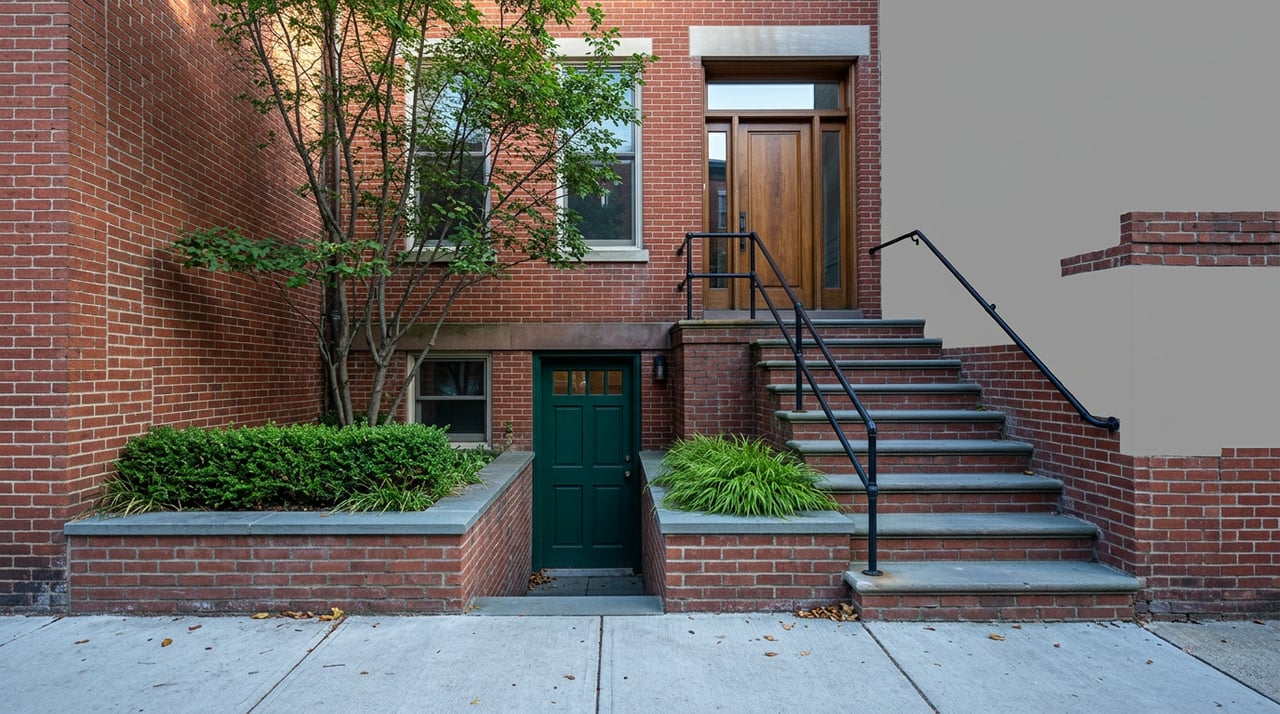
Two semi-detached brick two-families sit a few blocks apart in Gravesend. Both were built around the same era. Both have a finished basement with its own entrance, a tenant who has been paying rent for years, and an owner who has never filed a single permit for the space. On paper, from a listing sheet, they look identical.
Only one of them can legally stay that way.
The difference has nothing to do with the house, the block's zoning, or how well the basement was finished. It comes down to which side of a community district boundary the lot happens to fall on, a line that runs through Gravesend itself rather than around it. For anyone buying, selling, or already owning one of the neighborhood's income-producing two- and three-family houses, that line is now worth more attention than the basement's square footage.
In December 2024, New York City passed two companion measures as part of the City of Yes for Housing Opportunity plan. Local Law 127 sets the permanent building code for any basement or cellar apartment going forward: a ceiling of at least seven feet, proper egress, fire separation from any boiler equipment, and adequate light and ventilation. It applies citywide. Any homeowner in a one- or two-family home can build a legal basement unit to this standard from scratch.
Local Law 126 is the part that matters for a house that already has a tenant downstairs. It created a pilot program letting an existing, occupied basement or cellar apartment stay occupied while the owner brings it up to Local Law 127's standard over a ten-year runway, instead of doing a full renovation before a single rent check clears. A sprinkler system has to go in within two years of approval. Everything else, electrical, plumbing, structural work, follows on a phased schedule. The unit has to have existed before April 20, 2024, and the owner has until April 20, 2029, to apply.
The part most City of Yes coverage glosses over is that this pilot does not apply everywhere. It is restricted to fifteen community districts across four boroughs, and Staten Island isn't one of them. In Brooklyn, that list includes Community District 4 (Bushwick), Community District 10 (Bay Ridge, Dyker Heights, Fort Hamilton), Community District 11, and Community District 17 (East Flatbush). Community District 11 is Bath Beach, Gravesend, Mapleton, and Bensonhurst.
A pilot program that exists in fifteen of New York's fifty-nine community districts is not a citywide policy. It is a line on a map, and in Gravesend that line runs through the neighborhood, not around it.
Community District 11's boundaries are specific: Bay 8th Street and 14th Avenue to the west, 61st Street to the north, McDonald Avenue to the east, and Avenue U and Gravesend Bay to the south. Everything inside that box, including the western and central blocks most people picture when they hear "Gravesend," qualifies for the Local Law 126 pilot, flood zone restrictions aside.
East of McDonald Avenue, the picture changes. Brooklyn Community Board 15, which is not on the pilot's list, describes its own territory as covering Sheepshead Bay, Manhattan Beach, Kings Bay, Gerritsen Beach, Kings Highway, Homecrest, Plum Beach, and a section it names outright as East Gravesend. That designation shows up in both the borough president's own community board pages and in reference material on Brooklyn's community boards. It means a meaningful stretch of what real estate listings and longtime residents still call Gravesend, particularly the area east toward Ocean Parkway, sits administratively inside Community District 15 rather than 11.
Here is why that matters for a specific, well-known part of the neighborhood: the Sephardic enclave centered on Avenue T and Ocean Parkway, home to some of Gravesend's largest and most established two- and three-family houses, sits east of McDonald Avenue. A basement unit in that stretch does not get the Local Law 126 pilot's tenant-in-place path, no matter how long the unit has been occupied or how well it meets safety basics. It falls under Local Law 127's ground-up standard only, the same as a house in Sheepshead Bay or Ditmas Park.
| Community District | Neighborhoods covered | On the Local Law 126 pilot list | What that means for an existing basement unit |
|---|---|---|---|
| Brooklyn CD 11 | Bath Beach, Gravesend, Mapleton, Bensonhurst | Yes | Tenant can stay in place during a ten-year compliance runway, flood zone permitting |
| Brooklyn CD 14 | Flatbush, Midwood, Kensington, Ocean Parkway | No | Only the full Local Law 127 new-construction standard applies |
| Brooklyn CD 15 | Sheepshead Bay, Manhattan Beach, East Gravesend, Homecrest, Gerritsen Beach | No | Same as above, no in-place pilot regardless of how long the unit has been rented |
Even for a house that sits squarely inside Community District 11, eligibility is not the same as availability. New York's Department of Buildings opened its general ADU application portal on September 30, 2025, for new construction under Local Law 127. That is a different track from the Local Law 126 pilot for existing units. As of the city's ADU guidance page checked in spring 2026, the pilot's Authorization for Temporary Residence applications were still not being accepted while DOB finalized the program's rules, months after draft rules went out for public comment in December 2025. The Citizens Housing and Planning Council, which evaluated the city's earlier basement pilot, testified at that December hearing that some of the proposed conditions for getting an ATR go beyond what the underlying law requires and could discourage the exact homeowners the program is meant to help.
There is precedent for that concern. A 2019 basement legalization pilot focused on East New York drew interest from hundreds of homeowners. Only one made it far enough to begin construction, and that owner later withdrew because of an unrelated code violation. None completed the program. A Community District 11 address gets a Gravesend basement onto the list of eligible locations. It does not guarantee a fast or simple path once an application actually goes in.
For multi-family houses of the kind that fill Gravesend's side streets, the numbers involved are not small. As of mid-August 2026, multi-family listings in Gravesend carried a median asking price around $1.68 million. A basement unit is often part of what justifies that price. Treating its rental income as already legal, rather than as a pending application in a program still being built out, is the kind of assumption that shows up in a contract dispute later rather than at closing.
Does this affect co-ops or condos in Gravesend? No. Local Law 126's pilot and Local Law 127's new construction standard both apply only to existing one- and two-family homes. Gravesend's co-op and condo buildings are not part of either program.
My basement isn't currently rented. Can I still use the Local Law 126 pilot to add a tenant? No. The pilot is built specifically for units that were already occupied before April 20, 2024. A basement that is finished but empty would go through Local Law 127's standard new-construction process instead, with no tenant-in-place allowance.
Is the ATR application actually open right now? Not necessarily, even for an eligible Community District 11 address. The general ADU construction portal opened in September 2025, but as of the city's ADU guidance checked in spring 2026, the Local Law 126 pilot for existing units was still awaiting finalized DOB rules. Confirm current status directly with DOB before treating an existing basement's income as legally secured.
A basement apartment can be a genuine asset in a Gravesend contract, and it can just as easily be a liability disguised as one, depending on four digits in a community district number that most listing sheets never mention. If you are weighing a Gravesend house with a rented basement, or trying to price one you already own, Olga Moldavsky has spent years working these exact blocks and can help you figure out which side of the line your address actually sits on before you make it official. Let's Connect.
Stay up to date on the latest real estate trends.
Navigating the unique pockets of Brooklyn requires an agent who truly knows the heartbeat of the borough. I bring years of neighborhood insight and data-driven strategy to the table to help you reach your goals. Connect with me today and let's turn your Brooklyn real estate dreams into reality.
OLGA MOLDAVSKY
ADDRESS
1812 Bath Ave
Brooklyn, NY 11214