Midwood's Median Hides Three Markets: What Ocean Parkway Co-ops, New Condos, and Detached Houses Actually Trade for in 2026
July 23, 2026
July 23, 2026
Before you compare Midwood to any other Brooklyn neighborhood on a portal median, read the fine print on a Sutton House resale. The 1170 Ocean Parkway co-op, 155 units across 13 floors, charges a 10 percent flip tax on any profit at resale, and its monthly maintenance already includes real estate taxes, heat, gas, water, and electricity. That single line changes how a $340,000 studio and a $1.3 million detached house on East 23rd Street compete for the same buyer. They don't.
Midwood's headline number is a mix artifact. In March 2026, PropertyShark logged the neighborhood's median house sale at $1.3 million, its median condo at $650,000, and its median co-op at $355,000. The co-op median was up 30.3 percent year over year while the condo median fell 22.2 percent and the house median fell 10.1 percent in the same window. Three product types, three directions, one ZIP. If you are shopping the portal median, you are pricing a home that does not exist.
| Submarket | March 2026 median | YoY change | Typical DOM | Where it lives |
|---|---|---|---|---|
| Detached houses | $1.3M | -10.1% | 23–38 days on well-priced stock | East of Ocean Parkway, Avenues J to R |
| Condos | $650K | -22.2% | ~144 days | Ocean Parkway corridor, Avenue H, Ocean Avenue |
| Co-ops | $355K | +30.3% | ~146 days | Ocean Parkway full-service buildings |
The days-on-market gap is where the negotiation lives. Redfin's March 2026 sale-to-list ratio for Midwood as a whole was 97.2 percent, but that blends a house market clearing at 98.7 percent in under 40 days with apartment stock that has been sitting four to five months. A buyer working the co-op segment has leverage that a buyer chasing a detached house on East 23rd does not.
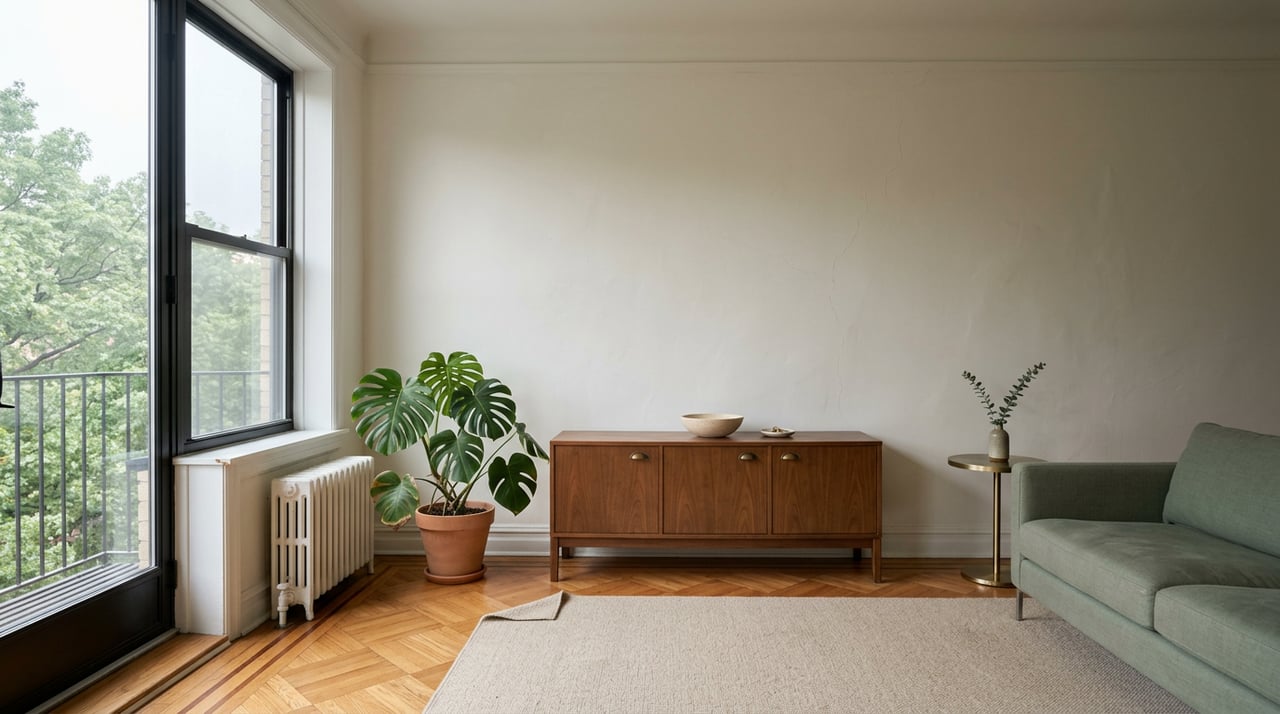
The co-op corridor along Ocean Parkway is the reason the neighborhood shows up on "cheapest in Brooklyn" lists. Sutton House studios have recently traded around $340,000, one-bedrooms from $220,000 to roughly $368,000. Emroy House at 763 Ocean Parkway lists similarly. Terrace Gardens Plaza, a 114-unit 1948 building, sits at the older end of the same product.
What the sticker hides:
The co-op median rising 30 percent year over year is not a story about speculative demand. It is a story about buyers who priced condos and detached houses first, ran the all-in monthly, and rotated. The stock is old, the boards are strict, and the deal only pencils if you understand what you are actually buying.
The condo median is the softest number in the neighborhood. Homes.com's July 2026 snapshot showed condos averaging 144 days on market. Behind that lag is a delivery schedule that has been steadily adding inventory:
The read for a buyer: new condo supply is arriving into a segment where the median has already given back 22 percent year over year. Sponsor units are where negotiation on closing costs, storage, and parking is possible. A resale condo two blocks away is competing with that sponsor unit whether the seller wants to admit it or not.
The block band that keeps the neighborhood on any "seller's market" list runs east of Ocean Parkway between Avenues J and R. Detached and semi-detached houses in that band cluster between roughly $900,000 and $1.8 million, with premiums for corner lots, wider streets, and proximity to the B/Q express stops at Avenue H and Kings Highway. R4 zoning gives many of those lots additional building rights, which is the reason investors keep showing up at open houses that are marketed to end-user families.
Inventory under $1 million was down about 7 percent year over year heading into spring, and well-priced stock is closing at 98.7 percent of asking in the mid-20s of days on market. That is the number that props up the borough-wide "family neighborhoods held up better" narrative in Q1 2026 reports, even as Brooklyn signed contracts fell 14 percent year over year in the same quarter.
The friction on this segment is not price discovery. It is buyer type. A detached four-bedroom on East 26th Street can be underwritten by an end-user family, an investor running rental math, or a developer running an as-of-right build. Each pays a different number for the same house. Pricing it to one of those three and marketing it to the wrong two is the most expensive mistake a Midwood seller makes.
The Midwood median tells you almost nothing about the Midwood you can actually buy into. The submarket you are shopping tells you everything.
The portal will show you one Midwood. The MLS will show you three. Decide which submarket you are actually buying into before you build a shortlist, because the negotiation stance, the timeline, and the closing math are different in each one. A buyer chasing a $355,000 Ocean Parkway co-op and a buyer chasing a $1.3 million detached house are not competing with each other, and they are not competing on the same terms.
Why are Midwood co-op prices rising while condos and houses fall? The three products serve different buyer pools. Co-ops attract first-time buyers and downsizers who prioritize an all-in monthly with utilities and taxes bundled. That demand held through 2025 and into 2026 while higher-ticket buyers pulled back on condos and houses. It is a mix and demand story, not a single-market story.
Is a 10 percent flip tax typical for Midwood co-ops? Sutton House charges 10 percent of profit on resale. Flip tax structures vary building by building, some as a percent of sale price, some as a per-share fee, some none at all. Always pull the current house rules and offering plan amendment before you assume.
What is actually delivering new in 2026? 1214 Ocean Parkway condos were scheduled for a February 2026 completion. 1508 Coney Island Avenue commercial delivery is completing exterior work. Smaller boutique buildings including H7 at 623 Avenue H and 2025 Ocean Avenue are already listing units.
Are the express B and Q stops actually a pricing factor? Yes, on the detached-house side. Proximity to the Avenue H and Kings Highway stations shows up in comps for houses between Avenues J and R. It matters less to the Ocean Parkway co-op corridor, which is served by the F and Q and the B6/B49 buses.
If you are trying to price a Midwood offer, list a Midwood home, or read the block-by-block signal underneath the borough numbers, that is the work. Reach out to Olga Moldavsky and the Moldavsky Team at RE/MAX Edge to talk through what your actual submarket is doing this month. Let's Connect.
Stay up to date on the latest real estate trends.
Navigating the unique pockets of Brooklyn requires an agent who truly knows the heartbeat of the borough. I bring years of neighborhood insight and data-driven strategy to the table to help you reach your goals. Connect with me today and let's turn your Brooklyn real estate dreams into reality.
OLGA MOLDAVSKY
ADDRESS
1812 Bath Ave
Brooklyn, NY 11214