Why Staten Island Sellers Are Feeling New York's New Disclosure Law More Than Anyone Else
August 20, 2026
August 20, 2026
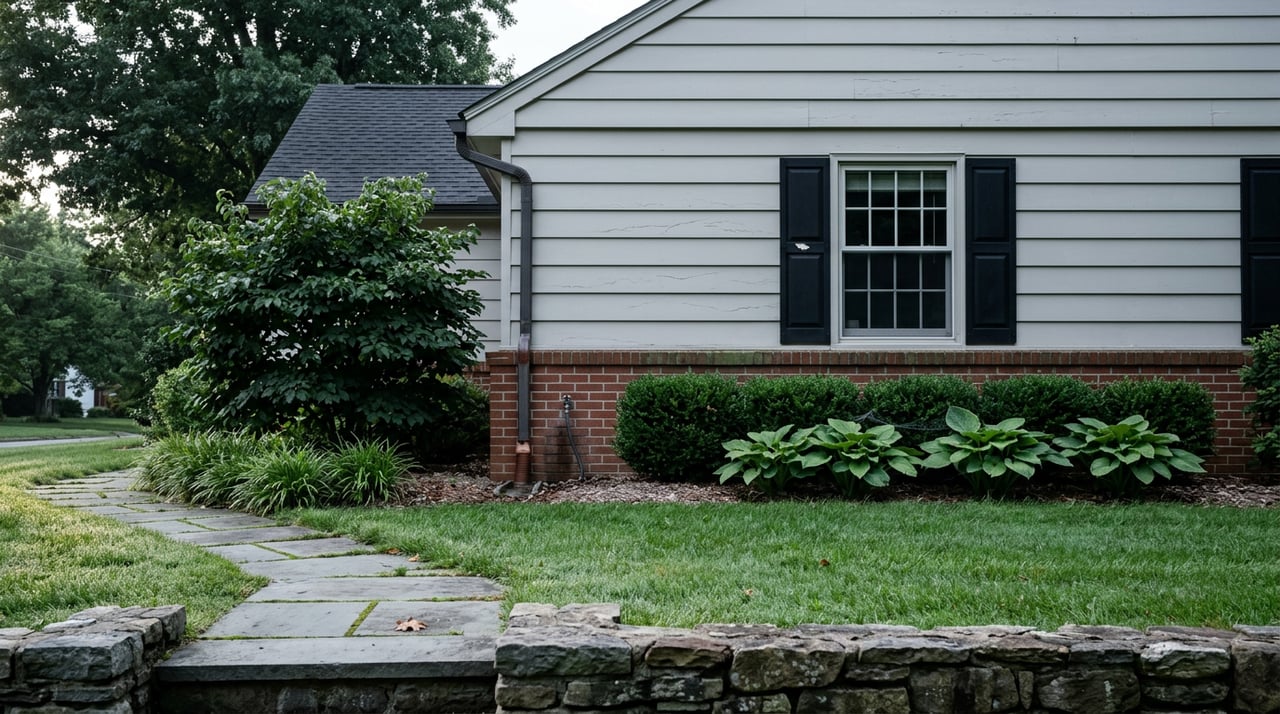
What do you actually know about the tank in your backyard? Not the above-ground fuel tank in the basement your father replaced in 2003. The other one. The one that was there before the house switched to gas, the one nobody dug up because nobody had to, the one whose fill pipe got capped and then forgotten under thirty years of hedges.
For most of the last two decades, that question never had to be answered in writing. A change to New York's disclosure law took that option away, and it lands on Staten Island differently than it lands almost anywhere else in the five boroughs.
Since 2002, New York's Property Condition Disclosure Act has required sellers of one-to-four family homes to complete a form answering questions about the property's condition before a buyer signs a contract. For just as long, the law gave sellers an escape hatch: skip the form, hand the buyer a $500 credit at closing instead. In downstate New York, that credit became the default. Attorneys expected it. Title companies barely glanced at the empty disclosure box. A generation of sellers across the city closed deals without ever putting their knowledge of the house on paper.
Governor Hochul signed a bill removing that escape hatch in September 2023, and the change took effect on March 20, 2024. The $500 credit is gone. Sellers of residential real property must now complete the disclosure statement and deliver it to the buyer before a binding contract exists. The law still asks only for the seller's actual knowledge, not an obligation to investigate, and "unknown" remains a legitimate answer to a question the seller genuinely can't answer. But a form filled out entirely in "unknown" reads very differently to a buyer's attorney than one filled out with specifics, and it tends to invite the kind of scrutiny during attorney review that slows a deal down rather than speeding it up.
Here's the part that matters if you're comparing notes with a friend selling in a different part of Brooklyn or Staten Island. The law's definition of residential real property covers one-to-four family dwellings. It does not cover condominium units or cooperative apartments, and it does not cover property inside a homeowners' association that the seller doesn't own in fee simple.
A seller closing on a co-op along Ocean Parkway or a condo near the water in Sheepshead Bay is selling something this particular statute was never written to cover. A seller closing on a detached house in Great Kills or a two-family in New Dorp is selling exactly what it was written for.
Staten Island's housing stock is overwhelmingly the kind of property this law targets: detached single-families, semi-attached colonials, two-family houses with a rental unit upstairs. That's a different exposure profile than a Brooklyn submarket built mostly around prewar co-op buildings, where the statute simply doesn't apply to most transactions. If you're selling a house on the island this year, you don't get to opt out anymore, and the type of house you own is exactly the type this law was designed around from the start.
A large share of Staten Island's housing was built between 1940 and 1975, when fuel oil delivered to a buried tank was the standard way to heat a home. As natural gas lines expanded through the borough in the 1980s, 90s, and 2000s, many of those houses converted. Converting the furnace was the easy part. Properly closing out the old tank was the part that got skipped.
A tank that was decommissioned correctly, drained, cleaned, filled with sand, and documented with the state's Department of Environmental Conservation, is a closed chapter. A tank whose fill pipe was simply capped and left in the ground is a different story. If it corroded and leaked before it was sealed, it's sitting there as an undisclosed environmental liability, and that liability now has to be addressed on a form the seller signs under their actual knowledge.
The practical fix, before you're ever asked the question in writing, is to establish tank status the same way any experienced local agent would advise: pull old fuel delivery receipts if you have them, check whatever paperwork came with the house when you bought it, and if none of that exists, order a ground-penetrating radar scan. It's a quick, non-invasive check, and it turns "I have no idea" into an actual answer before a buyer's attorney forces the issue during the due diligence window, which on most Staten Island contracts runs about a week to ten days after an offer is accepted.
Here's roughly what that process costs, based on typical figures seen across environmental contractors working in the region:
| Step | What it involves | Typical cost |
|---|---|---|
| Ground-penetrating radar scan | Non-invasive scan confirming whether a tank is present | around $400 |
| Decommissioning in place | Drain, clean, fill with sand or foam, file closure paperwork | $600 to $3,400 |
| Full excavation and removal | Dig out and haul the tank offsite | commonly $1,500 to $3,000 |
| Confirmed leak remediation | Soil testing, contaminated soil removal, closure report | often $20,000 to $50,000, more if contamination traveled |
Homeowners insurance frequently excludes pollution damage, which means a leak discovered mid-transaction can become the seller's problem financially as well as legally. Lenders are also cautious here. A mortgage underwriter who sees an unaddressed underground tank on an inspection report is often the reason a closing gets delayed, not the buyer's attorney.
This is where the timing actually bites. Staten Island's market isn't moving at one speed in 2026. Well-priced South Shore single-families in places like Tottenville, Annadale, and Prince's Bay have been clearing in roughly 30 to 45 days this year, often at or above asking. Mid-priced North Shore stock has been running closer to 80 to 110 days, and homes above $1.2 million have been taking anywhere from 90 to 180 days to close. Borough-wide, active inventory sat at roughly 887 to 921 homes as of mid-2026, tight enough to keep months of supply near 2.6, which favors sellers on paper.
A tank question you haven't answered yet doesn't cause much trouble in a 100-day North Shore sale. There's time to order the scan, get the paperwork, and fold the answer into the disclosure before it becomes a fire drill. It causes real trouble in a 30-day South Shore sale, where attorney review, inspection, and mortgage commitment are all racing toward the same closing date and a surprise tank finding can stall the fastest-moving segment of the market at exactly the point sellers expect things to be simple.
Do I have to test for a tank before listing? The law doesn't require an investigation, only honest disclosure of what you actually know. In practice, an untested "unknown" answer often invites the exact scrutiny a quick scan would have avoided.
What if I'm selling a two-family house with a tenant upstairs? Two-to-four family properties are still covered under the same disclosure requirement as single-families. The rental unit doesn't change the seller's obligation.
What if a previous owner already removed the tank? Ask for the closure documentation. Verbal assurance that "it's gone" isn't the same as a filed closure record, and buyers' attorneys increasingly ask for the paper trail rather than taking the seller's word for it.
Does this apply if I'm selling a co-op or condo on Staten Island? No. The statute specifically excludes condominium units and cooperative apartments, along with property in a homeowners' association not owned in fee simple by the seller.
If you're weighing when to list a Staten Island house this year, the tank question is worth answering before a buyer's attorney asks it for you. Olga Moldavsky works with sellers across the island's shores on exactly this kind of pre-listing groundwork. Let's Connect and figure out what your specific property needs before it goes on the market.
Stay up to date on the latest real estate trends.



Navigating the unique pockets of Brooklyn requires an agent who truly knows the heartbeat of the borough. I bring years of neighborhood insight and data-driven strategy to the table to help you reach your goals. Connect with me today and let's turn your Brooklyn real estate dreams into reality.

OLGA MOLDAVSKY
ADDRESS
1812 Bath Ave
Brooklyn, NY 11214