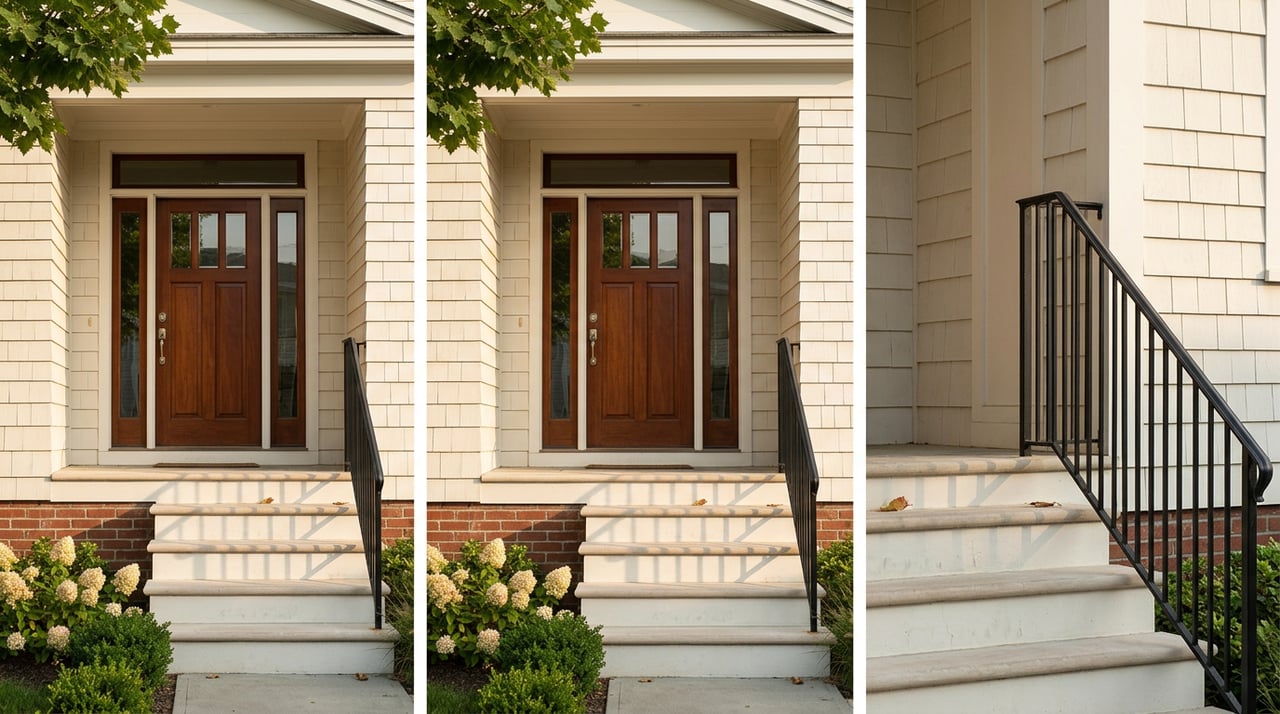
Selling in Manhattan Beach in 2026: The Disclosure, the Waiting Period, and the Median That Isn't Yours
August 6, 2026
August 6, 2026
The friction in a Manhattan Beach sale no longer starts at the inspection. It starts at the listing appointment, on a form that used to be optional and now is not. As of March 20, 2024, New York sellers of one- to four-family homes lost the ability to hand buyers a $500 credit in lieu of the Property Condition Disclosure Statement. The 2023 amendment repealed that workaround and added mandatory disclosures about flood history and whether the home sits in a designated flood zone. That change lands harder on this peninsula than almost anywhere else in Brooklyn, because Manhattan Beach is overwhelmingly single-family stock in or adjacent to a mapped AE flood zone.
If you are preparing to list here in 2026, the sequence of events between "we should sell" and "we accepted an offer" now includes work most sellers used to skip. This post is about that new sequence, the buyer-side financing clock that runs alongside it, and the reason the median price you are looking at on the portals is probably not the number you should list against.
The amended PCDS is not a minor edit. It expands the form from 48 questions to 56. The seven additions cover FEMA 100-year and 500-year floodplain status under current flood insurance rate maps, whether federal law requires the owner to maintain flood insurance, whether the property has received FEMA assistance for flood damage, current flood insurance, an existing FEMA elevation certificate, and any prior flood-damage claim with an insurance provider.
Two structural points matter for Manhattan Beach specifically:
The practical read: you cannot outsource the flood questions to your inspector and you cannot skip them by writing a check at closing. If the home has ever taken water, if the mechanicals were raised, if a prior owner pulled an elevation certificate, that history is now part of your listing paperwork.
Manhattan Beach closes a small number of houses in any given month. That is what makes the neighborhood-level median unreliable as a listing benchmark, and it is where the three big data feeds disagree the most.
Zillow's ZHVI, updated April 30, 2026, put the average Manhattan Beach home value at roughly $1.4M, up 3.5% year over year. Redfin, looking at February 2026, reported a median sale price around $1.4M, up 52.7% year over year, on ten closed sales, with homes averaging 137 days on the market compared with 76 days the prior year. Braithwaite Realty, using NYC Department of Finance records for the twelve months from April 2025 through March 2026 and restricting to single-family houses, showed the neighborhood median moving in the opposite direction: Manhattan Beach at $1.8M down to $1.5M, a 14.3% decline against the prior twelve-month comparison.
Three feeds, three stories. The reason is volume. With a handful of closings a month, one Ocean Avenue trophy sale pulls the tape up; a quiet quarter pulls it down. A 52.7% year-over-year jump on ten sales is a mix effect, not price acceleration you can bank on for your own listing.
A neighborhood median built on ten monthly closings is a mix report, not a comp. In Manhattan Beach, pricing has to come from three to five closed houses that match yours on lot, elevation, condition, and block, not from a headline number that moved because a Sea Breeze Avenue rebuild closed last Tuesday.
That is the interpretive point behind the disclosure change. Your PCDS answers now travel with your listing into buyer due diligence, and buyers in a slower, thinner market are reading them line by line. Overstating condition or understating flood history no longer trades off against a $500 credit. It trades off against real damages exposure years after closing.
The other Manhattan Beach-specific friction is on the buyer side, and it can pull a well-priced sale off schedule if nobody flags it early.
In Brooklyn, Red Hook, Coney Island, Brighton Beach, Manhattan Beach, Gerritsen Beach, and parts of Sheepshead Bay are in or near AE zones. For a buyer using a federally backed mortgage, that matters. Zone AE and VE are high-risk, and if the buyer has a federally backed mortgage, the lender requires flood insurance. There is a 30-day waiting period on NFIP policies, so the buyer needs to bind coverage well before the anticipated close.
If your accepted offer arrives on a 45-day close and the buyer discovers the NFIP timing after mortgage commitment, the calendar tightens fast. Sellers who understand this ahead of time can price and structure around it: a slightly longer close window, a buyer letter that acknowledges AE-zone status, or a pre-listing packet that includes the FEMA map printout and any elevation documentation the household has on file. It is the kind of preparation that reads as competence to the buyer's attorney and shortens the diligence back-and-forth.
Cost side, for context. A policy in a low-risk zone can start around $400 to $700 a year, while high-risk waterfront premiums run higher under Risk Rating 2.0. Elevation certificates must be completed by a land surveyor and can cost between $500 and $800 for uncomplicated cases, with more complicated cases running higher.
The version of "get the house ready" that worked in 2019 does not work here in 2026. This is the order I recommend for Manhattan Beach sellers on a one- to four-family house:
None of this is legal advice. It is transaction workflow. The legal advice belongs to your attorney, and the amended PCDA is a good reason to bring one in earlier than sellers used to.
Do co-op and condo owners in nearby buildings deal with the same disclosure change? No. Sellers of condominiums and cooperatives are exempt from the PCDA. The amended form applies to one- to four-family houses, which is the dominant Manhattan Beach product.
If the house has never flooded, do I still need to answer the flood questions? Yes. The questions are not conditional on prior loss. They cover current floodplain designation, federal insurance requirements, elevation certificates on file, and other structural facts about the property's flood exposure. Owners have to disclose whether the property is in a 100-year or 500-year floodplain per FEMA's flood insurance rate maps, whether it is subject to federal flood insurance requirements, and the property's flood insurance history.
Is the $500 credit really gone, or can my attorney still negotiate it in? It is gone as a statutory workaround. The credit provision has been eliminated and the PCDS is mandatory outside of very limited exemptions. Any credit you offer at closing today is a negotiated concession, not a substitute for the disclosure form.
What if I inherited the property? There are exemptions. Sales by estates and transfers to a beneficiary of a trust are excluded from the PCDA. Your attorney will confirm whether your specific transfer qualifies.
Selling a Manhattan Beach house in 2026 is not harder than it was five years ago. It is just less forgiving of shortcuts. The disclosure form is longer, the flood clock is real, and the median on the screen is a composite of a very small number of sales that probably do not resemble yours.
If you are thinking about listing on the peninsula this year and you want a walk-through of what your specific block, elevation, and floor plan mean for pricing and diligence, Olga Moldavsky and The Moldavsky Team work these transactions week in and week out. Let's Connect.
Stay up to date on the latest real estate trends.



Navigating the unique pockets of Brooklyn requires an agent who truly knows the heartbeat of the borough. I bring years of neighborhood insight and data-driven strategy to the table to help you reach your goals. Connect with me today and let's turn your Brooklyn real estate dreams into reality.

OLGA MOLDAVSKY
ADDRESS
1812 Bath Ave
Brooklyn, NY 11214