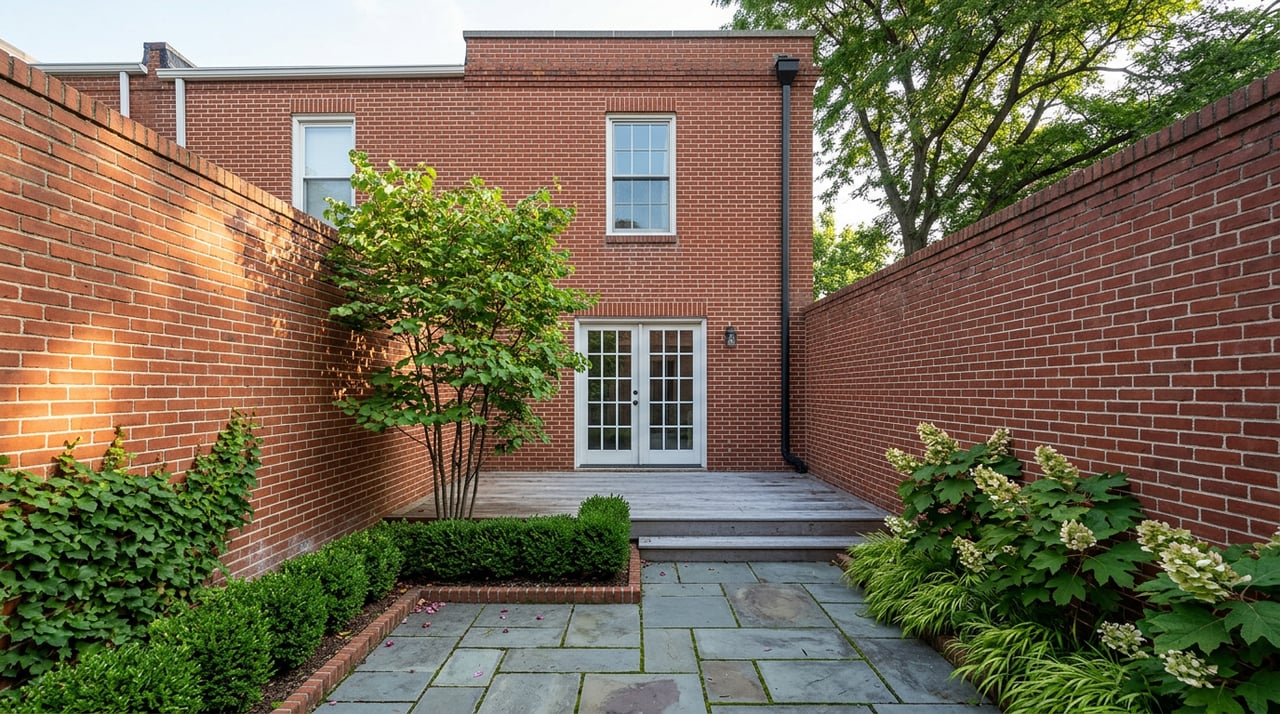
Park Slope Isn't as Landmarked as It Looks From the Sidewalk
August 27, 2026
August 27, 2026
"The Center Slope is truly the heart of Park Slope," Simeon Bankoff, executive director of the Historic Districts Council, told the Brooklyn Eagle. "It's the area which most people envision when they think of Park Slope."
He wasn't describing a protected landmark. He was describing the one part of the neighborhood that isn't.
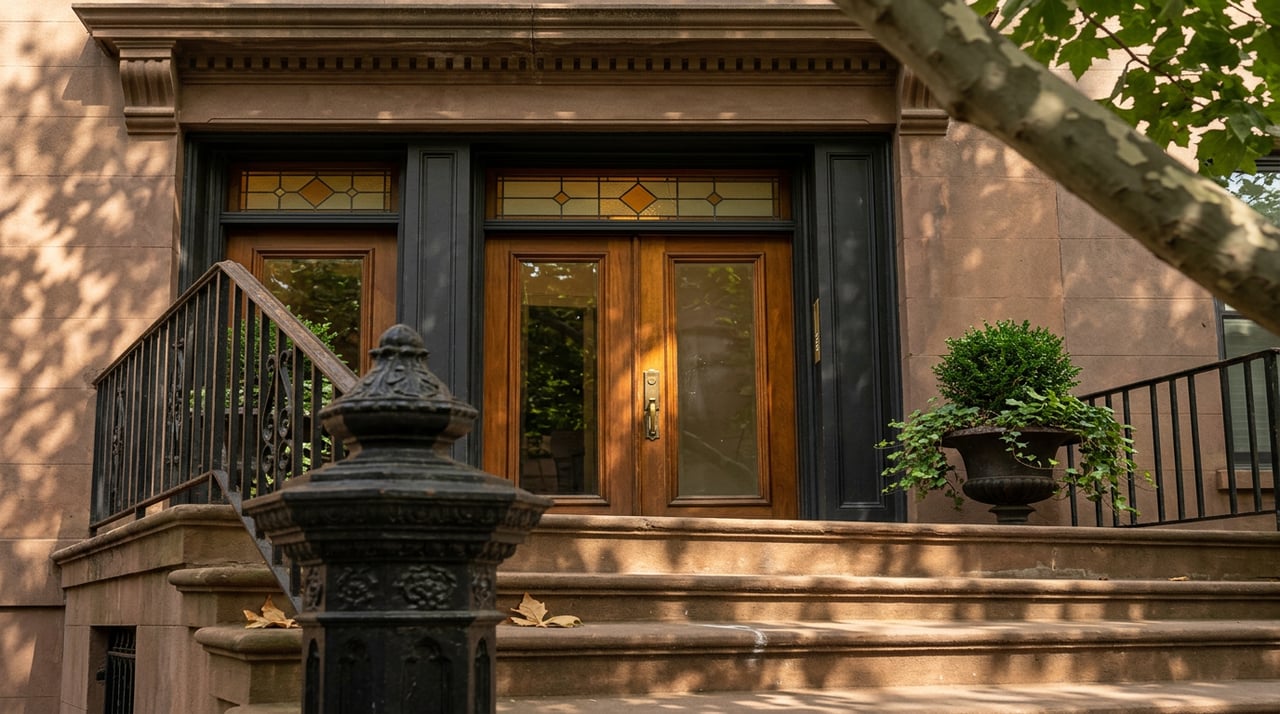
If you're touring brownstones on 4th Street or 3rd Street between Fifth and Sixth Avenues, the blocks that put Park Slope on postcards, you are standing outside the Landmarks Preservation Commission's jurisdiction. No Certificate of Appropriateness required for a new stoop. No public hearing to swap a window. That freedom cuts both ways, and almost nobody explains it to a buyer before they write an offer.
Park Slope's historic protection didn't arrive as one boundary. It arrived in three separate votes, each one drawn tighter around the blocks closest to Prospect Park and the streets flanking them.
| Year | What was added | Buildings | Where |
|---|---|---|---|
| 1973 | Original Park Slope Historic District | roughly 1,800 | Blocks closest to Prospect Park |
| 2012 | South Slope Extension | roughly 600 | 7th to 15th Streets, between 7th and 8th Avenues, plus the west half of Bartel-Pritchard Square |
| 2016 | North Slope Extension II | roughly 300 | Flatbush Avenue to Union Street, between 5th and 6th Avenues |
| Proposed, not yet designated | Center Slope | more than 1,500 | Roughly 1st through 9th Streets, the blocks between the two existing districts |
The Park Slope Civic Council, the group that led every one of those campaigns, says the original 1973 lines covered only about a quarter of the neighborhood when they were drawn. Two later expansions added protection on the North and South ends. The middle never got a vote.
Here's where it gets specific enough to matter for a house hunt. Seventh Avenue is Park Slope's commercial spine, and the Park Slope Civic Council describes its own protected coverage of that avenue as split into two disconnected pieces: one stretch from Flatbush Avenue to Union Street, another from 7th Street down to 15th Street. The blocks of Seventh Avenue between Union and 7th Street, the ones running past Artesana Home and Hungry Ghost coffee shop, sit in the gap. Uniting those two halves is one of the Civic Council's stated goals for the next expansion, and as of the group's most recent published advocacy page, that goal is still unmet.
The Civic Council has also flagged what happens on the blocks that stay outside the line. In a letter to LPC chair Sarah Carroll, the group pointed to a specific example:
Rooftop additions have been made to these buildings that would not have been approved by the Commission had they been subject to LPC review.
The buildings in question sit at the western end of the blocks between 7th and 8th Avenues, between Berkeley Place and 4th Street, brownstones the Civic Council says were excluded from the current district even though they were built by the same architects represented inside it. If you're buying a house on a block like that, the certainty you're paying for isn't just about your own renovation. It's about what the house next door can become without anyone getting a public hearing first.
Protection isn't only a restriction. It has a track record of preventing exactly the kind of change buyers say they're moving to Park Slope to avoid. When the 2012 South Slope Extension went in, it happened to include the old Pavilion Theater on Prospect Park West. A developer had been eyeing the site for luxury condos. Because the theater fell inside the new landmark boundary, that demolition never happened. The building is now Nitehawk Prospect Park, a dine-in movie house that's become one of the neighborhood's fixtures.
That's the case for landmark status in one sentence: it's the only tool in New York City zoning that regulates what a building can look like, not just how tall or how it's used. Zoning alone would not have stopped the Pavilion Theater's demolition. The historic district did.
None of that comes free to the owner. Inside a designated district, any change visible from the street, a new window, a rebuilt stoop, repointed brick, needs Landmarks sign-off before the Department of Buildings will issue a permit. For routine, in-kind restoration work, the Commission's own guidance says a complete Certificate of No Effect application is typically decided within about 10 business days, with a legal deadline of 30 business days once the filing is complete. That's the fast lane.
The slow lane is a Certificate of Appropriateness, required for anything the Commission considers a real alteration, additions, demolitions, new construction, removing a stoop or cornice. That path means a public hearing and community board review, and renovation guides tracking 2026 Brooklyn projects put the added hearing cycle at three to six months on top of standard permitting. Add LPC filing costs, commonly estimated between $2,000 and $8,000, and a landmarked renovation typically runs 15 to 25 percent above a comparable job on an unprotected house.
For a buyer weighing a fixer-upper brownstone, that's not a footnote. It's a line item that changes depending on which side of an invisible boundary the house sits on.
The market appears to price this distinction, even if most listings never mention it. In the three months ending May 2026, Park Slope's neighborhood-wide median sale price tracked at $1.9 million, with a median of roughly $1,530 per square foot. Narrow that same window to sales specifically inside the Park Slope Historic District, for the three months ending March 2026, and the median climbs to $2.0 million at roughly $1,570 per square foot.
The gap is not enormous, but it's consistent with what the renovation math predicts: buyers are willing to pay more per square foot for a house where the streetscape around it is locked in place, even knowing that same protection will slow down and add cost to whatever work they do inside the landmark boundary. A neighborhood-wide median blends both markets together. It tells you nothing about which one a specific listing belongs to.
A block's landmark status is public record, and it's worth confirming before you fall for a house rather than after.
How do I find out if a specific Park Slope address is inside the landmark district? The Landmarks Preservation Commission maintains designation reports for each district, including maps and the exact building-by-building boundaries, through its own official site. Checking before you bid takes minutes and settles the question for good.
If a block isn't landmarked now, could that change after I buy? Yes. The Park Slope Civic Council has pushed for a Center Slope extension since the North Slope designation in 2016, and any new district still needs an LPC vote followed by City Planning Commission and City Council approval. There's no fixed timeline, but the campaign hasn't stopped.
Does landmark status control what I can do inside the house? Generally, no. LPC review is aimed at what's visible from the street, facades, windows, rooflines, stoops. Interior renovations typically only draw LPC attention when the work requires a Department of Buildings filing that touches the building's exterior.
Every one of these lines runs through specific blocks, not the neighborhood as a whole, and the difference changes your renovation timeline, your budget, and what you're actually paying for at closing. If you're comparing a house in the original 1973 district against one two blocks over in the Center Slope, that's exactly the kind of block-level read Olga Moldavsky works through with buyers before an offer goes in, not after. Reach out and let's map out where your target block actually stands.
Stay up to date on the latest real estate trends.
Navigating the unique pockets of Brooklyn requires an agent who truly knows the heartbeat of the borough. I bring years of neighborhood insight and data-driven strategy to the table to help you reach your goals. Connect with me today and let's turn your Brooklyn real estate dreams into reality.
OLGA MOLDAVSKY
ADDRESS
1812 Bath Ave
Brooklyn, NY 11214