What It Is Like To Live In Ditmas Park
July 16, 2026
July 16, 2026
Looking for a Brooklyn neighborhood that feels calmer than you expect, yet still keeps daily life close at hand? If you are considering Ditmas Park, you are probably trying to balance character, convenience, and a commute that works in real life. This guide will help you understand what living in Ditmas Park is actually like, from its streetscape and housing to errands and transit. Let’s dive in.
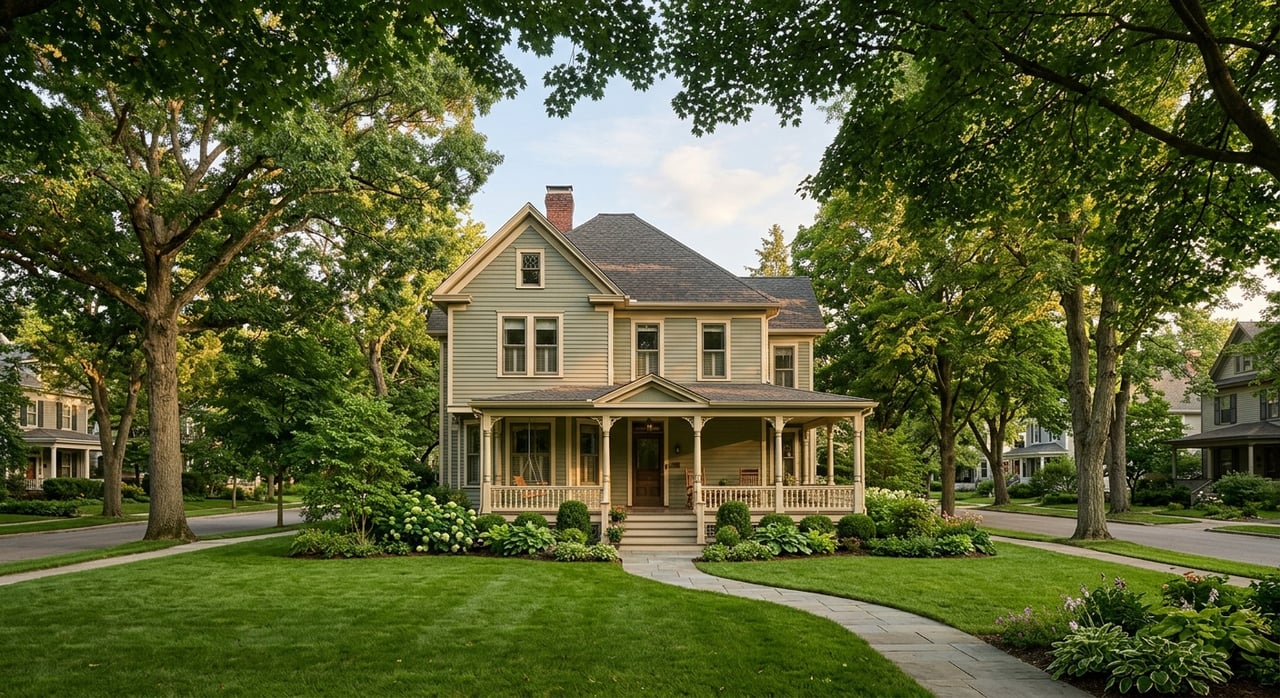
Ditmas Park stands out for its leafy, residential character. Official preservation sources describe it as a suburban-in-the-city pocket of Flatbush, with tree-lined blocks and distinctive early-20th-century homes.
That look is not accidental. The area grew during Flatbush’s early suburban expansion, when city services and transit made larger-lot residential development possible. Today, that history still shapes how the neighborhood feels when you walk through it.
One of the clearest things you notice in Ditmas Park is the housing. The landmarked streets are known for detached houses rather than rows of attached homes or tall towers, which gives the area a more open, porch-forward look.
The Landmarks Preservation Commission notes that Ditmas Park West includes 127 free-standing houses built between 1902 and 1910 on four tree-lined streets. Across the area, you will see Queen Anne, Colonial Revival, Shingle-style, and some Tudor Revival homes, often with porches, bay windows, and wood trim.
For buyers, that means Ditmas Park can feel visually very different from many other Brooklyn neighborhoods. For sellers, it helps explain why block-by-block context matters so much here. A detached historic home on a quiet residential street may appeal to buyers for very different reasons than a property closer to a busier avenue.
Daily life in Ditmas Park often depends on where you are standing. On the side streets, the experience tends to feel quieter and more residential, shaped by mature trees and historic homes.
Closer to major avenues, the rhythm changes. The neighborhood becomes more active and practical, with a mix of residential buildings, shops, services, and everyday foot traffic. That split is a big part of Ditmas Park’s appeal.
Ditmas Park is not just about pretty houses. It also functions as a neighborhood where many day-to-day needs can be handled close to home.
According to the city’s Avenue NYC commercial district assessment, the major commercial corridors include Cortelyou Road, Newkirk Avenue, Foster Avenue, Coney Island Avenue, and Ocean Avenue. These streets support routine errands and local services, which helps make the neighborhood practical as well as attractive.
The same assessment found that 67% of shoppers come daily, while another 16% visit two to four times a week. That suggests these are regular-use commercial streets, not places people visit only occasionally.
Each corridor adds something a little different to daily life. The city describes Coney Island Avenue as a commercial center for the South Asian migrant community, with light industry, professional services, bakeries, and restaurants.
Ocean Avenue blends residences with medical offices and houses of worship. Taken together, these corridors create a neighborhood where convenience is spread through everyday streets rather than concentrated in one major shopping district.
That matters if you want a place where picking up groceries, stopping at a bakery, or taking care of practical errands feels local and manageable. It also matters if you are selling, because buyers often care as much about the flow of daily life as they do about the home itself.
The city’s commercial assessment also gives a useful window into what local shoppers say they want more of. Requested businesses included restaurants, bookstores, gyms or fitness studios, bakeries, and banks.
This kind of feedback helps paint a realistic picture. Ditmas Park already supports daily routines well, but like many active Brooklyn neighborhoods, residents still look for a mix of practical services and lifestyle options close to home.
The area also benefits from nearby institutions that support everyday life. The city reports that more than a dozen public and private schools, along with Brooklyn College, are within a mile of the neighborhood.
That does not make any judgment about quality, but it does show that education-related destinations are part of the local landscape. For many households, having schools and college access nearby adds to the neighborhood’s day-to-day practicality.
If you are wondering whether Ditmas Park works well without a car, the available data points to yes. The neighborhood is served by several nearby subway stations, including Newkirk Plaza on the B and Q, Cortelyou Road on the Q, Beverley Road on the Q, and Church Avenue on the B and Q.
That gives residents multiple access points depending on where they live within the area. It also reinforces the neighborhood’s pattern of quiet residential blocks paired with solid transit access.
Broader data for Community District 14, which includes Ditmas Park along with surrounding neighborhoods, shows a strongly car-free commute pattern. In 2024, 72.5% of commuters in the district used a car-free commute, and the mean travel time to work was 44.9 minutes.
These figures are neighborhood context rather than block-by-block measurements, but they still help explain the area’s lifestyle. In practical terms, Ditmas Park reads as a place where walking and subway access matter a lot.
When people ask what it is like to live in Ditmas Park, they are often really asking what kind of housing they can expect. The simplest answer is that the landmarked residential blocks are primarily known for historic detached houses, while the larger avenues show a more mixed residential and commercial pattern.
That mix can be useful for different kinds of buyers. Some are drawn to the older-house character and more open residential feel, while others prioritize being closer to transit or commercial activity.
For sellers, this is where pricing and positioning become especially important. In a neighborhood with clear micro-differences, accurate local knowledge can shape how buyers respond to a listing.
For many buyers, Ditmas Park offers a combination that is hard to find in one place. You get historic housing character, tree-lined blocks, nearby errands, and strong subway access.
It is not just one thing that defines the appeal. The value comes from how the quieter residential streets and active commercial corridors work together.
If you are comparing Ditmas Park with nearby parts of Flatbush or Midwood, that balance is often the key distinction. The busy corridors provide convenience, while the historic detached-house streets give the neighborhood much of its distinctive identity.
Ditmas Park is the kind of neighborhood where broad Brooklyn advice is not enough. Buyers respond to specific streets, housing types, transit access, and how a home fits into the neighborhood’s character.
That is why a block-by-block approach matters. If you are buying or selling in Ditmas Park, working with someone who understands the area’s housing mix, buyer priorities, and neighborhood context can help you make more confident decisions.
If you want practical guidance on buying or selling in Ditmas Park or nearby South Brooklyn neighborhoods, connect with Olga Moldavsky for clear advice and hands-on support.
Stay up to date on the latest real estate trends.
Navigating the unique pockets of Brooklyn requires an agent who truly knows the heartbeat of the borough. I bring years of neighborhood insight and data-driven strategy to the table to help you reach your goals. Connect with me today and let's turn your Brooklyn real estate dreams into reality.
OLGA MOLDAVSKY
ADDRESS
1812 Bath Ave
Brooklyn, NY 11214