Everyday Living In Coney Island Beyond The Boardwalk
July 9, 2026
July 9, 2026
If you only picture roller coasters, beach crowds, and summer weekends, Coney Island can be easy to misread. For people thinking about living here, the real question is what day-to-day life feels like once the visitors head home. This guide gives you a practical look at Coney Island beyond the boardwalk, from housing and transit to local amenities and the neighborhood’s seasonal rhythm. Let’s dive in.
Coney Island works as both a waterfront attraction and a year-round neighborhood. City planning documents describe it as a place where the amusement area, residential streets, and retail corridors all exist side by side.
That mix shapes how the neighborhood feels in everyday life. You have a public-facing shoreline and entertainment identity, but you also have local routines centered on residential buildings, errands, transit, and community-serving businesses.
One of the clearest ways to understand Coney Island is to look at its main corridors. City commercial assessments identify Mermaid Avenue, Surf Avenue, Stillwell Avenue, and the boardwalk as distinct but connected parts of the neighborhood.
Mermaid Avenue functions as the primary commercial corridor, with retail and other local storefronts that support everyday needs. Surf Avenue and the boardwalk area are more closely tied to the amusement district, while Stillwell Avenue acts as a key connection point for both residents and visitors.
Neptune Avenue adds another layer to the area’s day-to-day landscape. According to the city’s assessment, it includes auto-oriented businesses and low-rise mixed-use buildings, which reinforces that Coney Island is not built around one single streetscape or housing pattern.
The boardwalk is not just a tourist backdrop. The New York City Landmarks Preservation Commission says the Coney Island Boardwalk opened in 1923, stretches 2.7 miles, and gives access to the beach, amusements, and ocean views.
More importantly for residents, it is used year-round for walking, biking, jogging, and similar recreation. That means you can think of it as part of daily life, not only as a place for summer outings.
The beach itself has a more limited schedule for swimming. City guidance says lifeguards are on duty only during beach season, generally from Memorial Day weekend through the week after Labor Day, with daily coverage from 10 a.m. to 6 p.m. during that period.
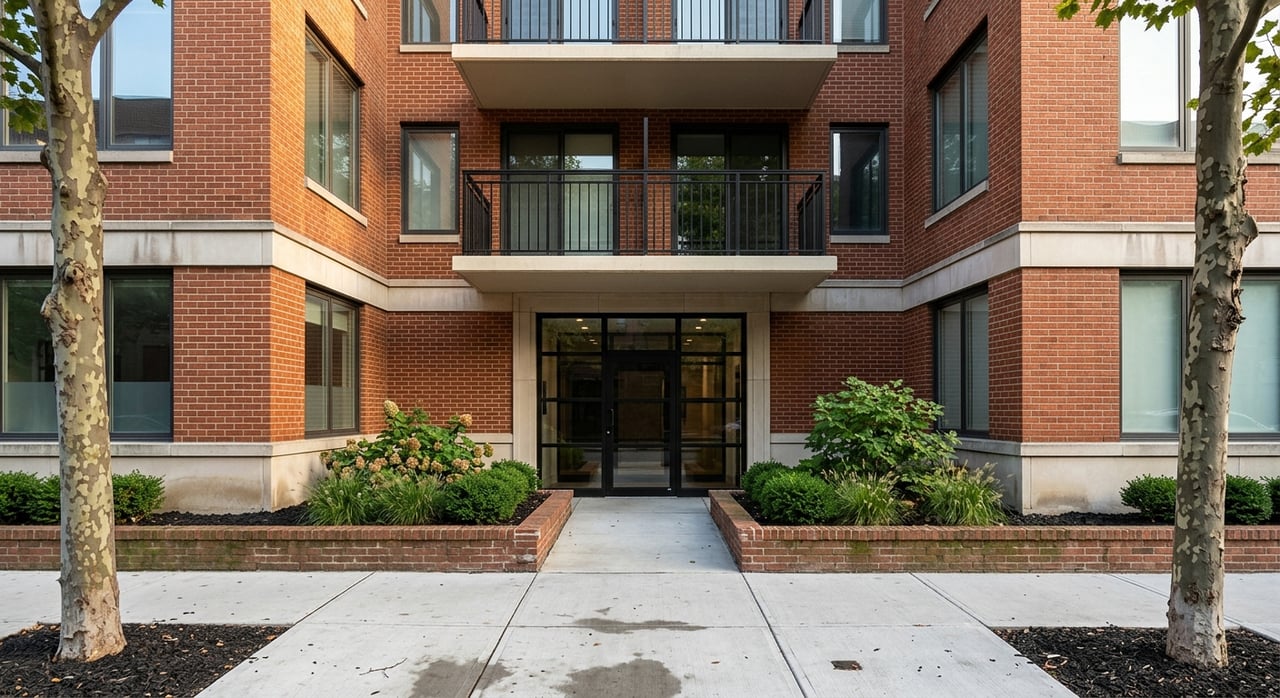
If you are trying to picture the housing stock, think variety rather than one dominant type. Official planning documents describe low-scale one- and two-family homes, low-rise apartment buildings, and taller 15- to 20-story residential complexes north and west of the amusement area.
Along Surf Avenue and Mermaid Avenue, newer waterfront corridors allow residential uses with ground-floor retail. Mermaid Avenue also includes low-rise mixed-use buildings, attached one- and two-family homes, and one-story commercial buildings, while parts of western Surf Avenue include high-rise residential buildings and senior-citizen facilities.
That variety matters if you are comparing lifestyle options. In practical terms, Coney Island is not a single condo market, not a townhouse-only neighborhood, and not defined by one building style.
Coney Island also has a substantial subsidized-housing and public-housing presence. The NYU Furman Center reports 119 subsidized properties, 15 public-housing properties, and 6,140 public-housing units, with public housing accounting for 20.7% of rental units as of 2025.
At the same time, the neighborhood has seen meaningful growth in newer housing. The Furman Center reports that 5,324 units in buildings with four or more units were added between 2010 and 2025, and 646 residential units were authorized by new building permits in 2025.
City announcements also show that redevelopment is continuing. In June 2025, the city said projects in the pipeline were expected to add about 1,100 homes over the next three years, including affordable, supportive, and mixed-income housing.
For buyers and sellers, this points to a housing market with multiple layers. You are looking at a neighborhood shaped by older residential stock, large established buildings, subsidized housing, and ongoing development rather than a one-note product mix.
Coney Island is well set up for transit-oriented living. The MTA lists Coney Island-Stillwell Av as a fully accessible station serving the D, F, N, and Q lines, and bus service includes routes such as the B36, B68, and B82.
That connectivity supports a car-light lifestyle. The NYU Furman Center reports that 64.9% of commuters had car-free commutes in 2024, which suggests many residents rely on subway and bus service for daily travel.
That said, convenience and travel time are not exactly the same thing. The same source reports an average commute time to work of 43.6 minutes, so while living here without a car is realistic, your routine may still reflect the longer travel patterns common in transit-dependent waterfront parts of Brooklyn.
Coney Island has more to offer than summer attractions. The city’s commercial district assessment points to a broader network of long-standing businesses and community organizations that help support everyday life.
Year-round anchors include the New York Aquarium, Ford Amphitheater, and the YMCA. These destinations help keep activity in the area going beyond peak beach season and add to the neighborhood’s identity as more than an amusement strip.
The planned 2026 Coney Island BID also signals a push toward stronger year-round economic activity. The BID is intended to support small businesses, improve public space, and strengthen corridors along Mermaid and Surf Avenues.
Coney Island’s biggest lifestyle distinction may be how much the pace changes throughout the year. Summer brings beach traffic, amusement activity, and larger crowds, especially near the boardwalk and main entertainment areas.
In the off-season, the neighborhood tends to feel more resident-centered. That shift can be a real advantage if you like having waterfront access and public recreation nearby, but also want to understand how the area functions outside peak visitor months.
This seasonal contrast is one of the most important practical points for anyone considering a move. You are not just choosing a location near the ocean. You are choosing a neighborhood with a rhythm that changes noticeably between warm-weather tourism and everyday residential life.
If you are buying in Coney Island, it helps to look closely at micro-location. A home near Mermaid Avenue may offer a different daily feel than one closer to Surf Avenue, the boardwalk, or the taller residential sections north and west of the amusement area.
If you are selling, neighborhood context matters just as much as square footage or finishes. Buyers may respond differently depending on transit access, building type, proximity to commercial corridors, and how they picture the area in summer versus winter.
In a neighborhood with mixed housing stock and an evolving development pipeline, local knowledge becomes especially important. Understanding where a property sits within Coney Island’s broader pattern can help you price, market, and evaluate it more accurately.
Coney Island is best understood as a place with two identities that work together: a public waterfront destination and a lived-in Brooklyn neighborhood. If you want clear, neighborhood-specific guidance on buying or selling in Coney Island or nearby South Brooklyn communities, connect with Olga Moldavsky.
Stay up to date on the latest real estate trends.
Navigating the unique pockets of Brooklyn requires an agent who truly knows the heartbeat of the borough. I bring years of neighborhood insight and data-driven strategy to the table to help you reach your goals. Connect with me today and let's turn your Brooklyn real estate dreams into reality.

OLGA MOLDAVSKY
ADDRESS
1812 Bath Ave
Brooklyn, NY 11214